



Have you heard stories about a hair transplant in Turkey gone wrong? It can be pretty alarming, especially if you, personally, are dealing with hair loss issues. The sad truth is that complications can happen anywhere in the world. It’s not just Turkey.
The real issue is not the country. It’s how good the clinic is. It’s how skilled the doctors and nurses are. You need to learn what to look for, to understand the risks, and set realistic expectations. These are the most important things that can help you avoid bad hair transplant clinics in Turkey and have a successful hair transplant journey.
If you’re considering this type of treatment, you can check real experiences with hair transplants in Turkey. This will help you understand what a properly managed process looks like.
“A successful hair transplant doesn’t begin in the operating room, but with precise planning and honest consultation.”
– Medical opinion from aesthetic medicine
Why Do Some Hair Transplants in Turkey Go Wrong?
Did you know that Turkey is one of the leading destinations for medical tourism? Their surgeons go through thousands and thousands of hair transplantation procedures each year. On the flipside, this high demand has also led to wide variations in clinic standards.
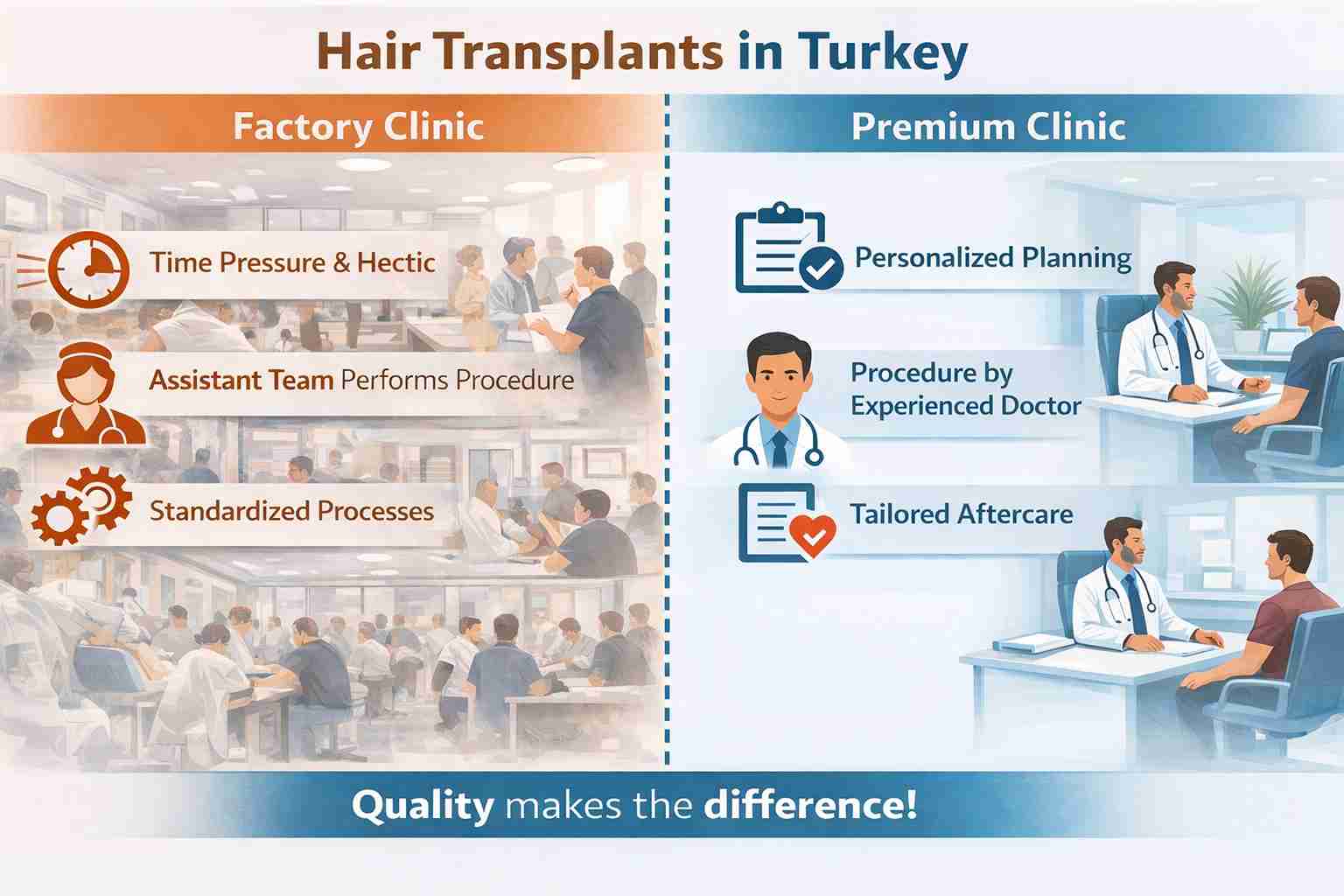
Problems often happen when patients choose low-cost providers without verifying their credentials. Also, some facilities operate as high-volume factory clinics, prioritizing quantity over quality. In this atmosphere, the procedure itself will be performed by technicians rather than an experienced hair transplant surgeon, and this increases the risk of complications.
Another common issue is unrealistic marketing. Promises of unlimited density, instant results, or extremely low prices are actually signals of poor-quality care. And, when expectations are based on exaggerated claims, dissatisfaction is almost inevitable, even if the procedure itself is technically adequate.
Most Common Causes of Botched Hair Transplants
You need to understand what can go wrong. If you know that, you’ll be able to recognize the signs of a botched hair transplant and avoid risky providers.
- Poor hairline design: An unnatural or overly aggressive hairline can make the entire thing look a bit artificial. A good hairline design should take into account your age, face measurements, and how your hair is likely to fall out in the future.
- Overharvesting the donor area: Removing too many grafts from the donor area will actually thin the back of the scalp and leave visible scars or permanent damage.
- Low graft survival: If the grafts are not handled properly, the process takes too long, or the implantation techniques are poor, the grafts may not survive, which can cause hair to grow unevenly.
- Incorrect angle and direction: Hair that grows in the incorrect direction or at the wrong angle will look fake and be hard to fix.
- Infection or poor aftercare: Lack of proper hygiene or inadequate post-procedure instructions can increase the risk of infection.
In more extreme situations, these issues can actually lead to irreversible damage. If you have gone through something like that, you can consider legal action.
The Hidden Risks of Cheap Hair Transplant Packages
When you see low prices, we get it, it’s attractive, but ultra-cheap packages often come with several hidden compromises.
If it’s cheap, then the surgeon is only briefly involved, or not involved at all. The most important steps of the hair transplant surgery will probably be delegated to inexperienced technicians.
There are also other risks:
- Reused or poorly sterilized instruments
- Rushed procedures due to overbooking
- No long-term follow-up or aftercare
- Inflated promises about the number of grafts
So, what can we deduce? A low price is often a reflection of reduced medical oversight, lower-quality equipment, and poor patient support. So, you need to look beyond cost and focus on safety and long-term outcomes when picking a clinic in Turkey.
How to Choose a Reliable Hair Transplant Clinic in Turkey
To stay away from subpar hair transplant clinics in Turkey, you may start by doing some research and setting up an organized review method.
- Check the surgeon’s credentials: Make sure that the hair transplant surgeons who execute the surgery are qualified and have done it before.
- Look for clinic accreditations: All reputable clinics follow strict hygiene protocols and operate under strict medical regulations.
- Ask for a clear consultation: Before suggesting any form of treatment, a reputable clinic would first look at your hair loss pattern, the quality of the donor hair, and set realistic graft requirements.
- Review real patient results: You should look into before-and-after photos of hair transplants in Turkey to understand what natural results actually look like.
- Confirm aftercare support: A proper follow-up is a must if you want steady healing, a high graft survival percentage, and long-term success.
Patient Expectations vs Reality
There are instances where a case is considered a failed procedure, but in reality, they are actually the result of unrealistic expectations rather than the surgeon using a poor technique.
You should learn that hair growth after any hair restoration surgery takes time. The shedding phase comes first, and it takes about 2 to 6 weeks. New growth begins after around 3 or 4 months. You will see a noticeable density increase after 6 to 9 months, with the final results showing up 12 to 15 months after the transplant.
Density is also limited by the available donor area and individual hair characteristics such as thickness, curl, and color contrast. Not every patient can achieve full coverage in a single session.
Therefore, a realistic treatment plan focuses on long-term planning, preserving your existing hair, and using available grafts in a strategic fashion.
What studies have found on this topic
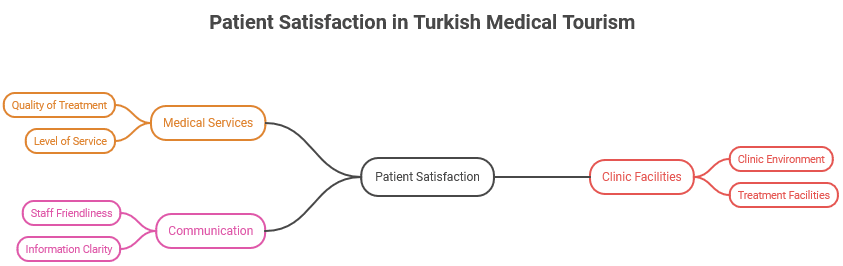
In a quantitative survey of 427 patients from 24 countries who received medical treatment in Turkey, overall satisfaction was found to be high regarding the medical services, the clinic and its treatment facilities, as well as the communication of the clinic staff. Patients provided positive feedback on the quality of treatment, the level of service, and their overall satisfaction.
Why Clinic Quality Matters More Than Location
Hair transplant complications are not something that only happens in Turkey. Poor outcomes occur in every country when patients choose inexperienced providers or focus only on the price.
Turkey has world-class clinics, but there are also low-quality operators. Picking the right one all comes down to patient research and informed decision-making.
Choosing a reputable clinic ensures several things.
- You get proper planning for your hair restoration journey.
- It will be a safe and sterile hair transplantation procedure.
- The calculation of how many grafts are needed will be accurate.
- You will get ongoing support.
Platelet rich plasma therapy is one of the more advanced treatments. This can also help with healing and make grafts last longer, but only if it is done by trained doctors.
A hair transplant can be a safe and successful approach to boost your confidence and get natural-looking results if you plan ahead and get expert care.
FAQs
What are common complications from hair transplants in Turkey?
Hair transplant procedures often trigger temporary reactions like swelling, skin redness, mild aches, or shedding. These signs mark the natural progress of healing and typically fade after several weeks.
Patients rarely face serious complications when selecting a reputable clinic with medical supervision in Turkey. Top-tier clinics maintain high hygiene levels, employ sterile tools, and place experienced surgeons in charge of every step, minimizing potential risks.
Success depends on the clinic’s quality and the medical team’s skill rather than the location.
What are common signs of a poorly done hair transplant?
Indications of a failed procedure often manifest through specific visual flaws:
The hairline appears unnaturally straight or resembles a synthetic plug row. Gaps break up the hair density, leaving some spots thick and others bare. Thick white lines or small round marks mark the donor area. Individual hairs poke out at awkward angles instead of following the natural flow of the scalp.
Patience remains crucial during the initial recovery phase. The scalp often sheds transplanted hairs before new ones push through, creating a temporary, thin look. Full growth requires a wait of 12 to 15 months.
Experienced doctors in Turkey focus on sketching a unique hairline for every patient. They position each graft to match the person’s age and facial structure.
How to identify a failed hair transplant procedure abroad?
A transplant falls short if, after 12 to 15 months, barely any new hair emerges. Often, the resulting thickness fails to match the original agreement, or the donor site shows clear signs of depletion through visible patches. Some patients also struggle with lasting infections or marks on the skin.
Experienced surgeons rarely encounter total medical failure. Most disappointments stem from false hopes regarding the pace of growth or the final thickness. Selecting a reputable clinic in Turkey with proven success stories minimizes the chance of a poor outcome.
How to find a reputable clinic for hair transplant repair?
Seek a surgeon focusing on repair cases for necessary corrective work.
The doctor should provide a large gallery of photos showing past revision procedures. During the meeting, the specialist explains donor limitations clearly. This professional prioritizes a practical long-term strategy over fast results.
Many skilled hair restoration experts in Turkey perform complex repair procedures for international patients. Choosing clinics with personalized planning instead of high-volume packages ensures the highest safety.
Can you trust hair transplants in Turkey?
Yes, provided you select the right clinic.
Turkey leads the international market for hair transplantation by performing thousands of procedures every year. Numerous clinics follow strict medical regulations and employ teams with years of practical experience.
Trust builds through:
- Verified surgeon credentials
- Clear communication
- Real patient testimonials
- Transparent pricing without unrealistic promises
Proper research reveals high standards of care at competitive prices.
Is Turkey bad for hair transplant?
Turkey offers excellent hair transplant services and holds a top position in global rankings for medical restoration.
Several factors support this strong standing:
- Surgeons perform numerous operations daily, building deep practical knowledge through constant repetition.
- Clinics invest in the newest medical tools and maintain high-standard treatment rooms.
- Favorable exchange rates and lower operating costs keep prices low without sacrificing medical standards.
Quality varies between individual providers just like anywhere else. Success relies on your thorough investigation and the specific clinic choice you make.
Do Turkish hair transplants actually work?
Qualified professionals achieve reliable results with these procedures.
Techniques like FUE (Follicular Unit Extraction) and DHI (Direct Hair Implantation) rely on proven scientific methods used globally.
Patients choosing reputable clinics and following aftercare instructions notice specific changes:
- New hair follows the natural growth pattern of the scalp.
- The scalp accepts and retains the moved hair roots.Hair continues growing in the treated spots for years.
Turkish specialists focus heavily on these treatments, leading to predictable outcomes.
Is it safe to go to Turkey for hair transplant?
Most patients find the procedure safe.
Turkey attracts thousands of international visitors for cosmetic and hair restoration treatments. Numerous clinics hold international certifications while serving people from Europe, the Middle East, and North America.
Safety relies on:
- Direct surgeon involvement
- Strict sterilization protocols
- Clear aftercare support
Meeting these standards ensures a reliable and secure hair transplant experience in Turkey.
Are hair transplants in Turkey better than USA?
Choosing the right clinic and surgeon matters more than the country itself.
Turkish medical centers frequently provide high-quality care through several advantages:
- Modern medical techniques
- Surgeons with vast experience from performing numerous operations
- Lower prices for the same procedures
- Full service bundles covering the first talk, the surgery, and follow-up care
In the United States, costs climb much higher without guaranteeing superior results. Many people fly to Turkey to find specialists and high-tech equipment while saving money.
The finest outcomes depend on the skill of the doctor and a focus on excellence, regardless of the location.