



Hair loss is not exclusively attributable to genetics or aging. In many cases, internal changes (or, rather, changes that happen inside our bodies) affect how hair grows and sheds. Hormonal hair loss happens when shifts in hormonal levels disrupt the normal activity of hair follicles. Understanding this connection makes it easier to recognize the problem and find the right treatment.
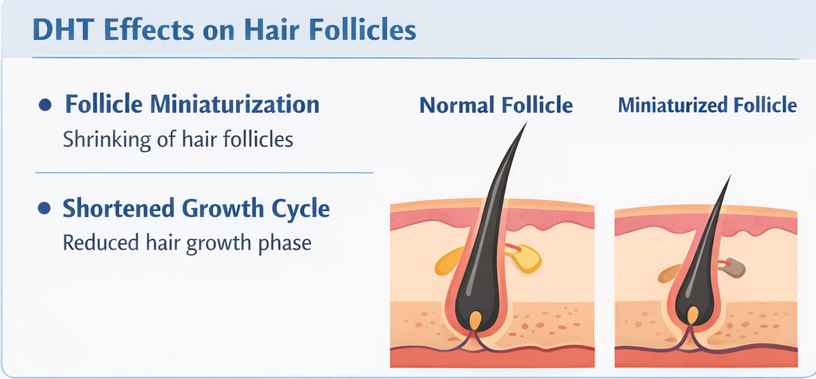
A review of hormonal influences on hair loss confirms that hormones such as DHT and estrogen significantly impact the hair growth cycle, with androgen excess leading to follicle miniaturization and pattern hair loss.
What Is Hormonal Hair Loss?
Our hair grows in cycles. Each strand moves through a growth phase, a short transition, and a resting stage before it falls out. This process depends on a stable hair growth cycle.
When hormones change, the cycle becomes unbalanced. More follicles enter the resting stage too early. Over time, this leads to noticeable hair loss and reduced density. Many people first notice a form of hair thinning rather than sudden shedding.
Common Types of Hormonal Hair Loss
Hormones play a role in several types of hair loss, though some patterns are more common than others.
For example, we have Androgenetic alopecia, which is the most frequent form. If you are a man, it will manifest as male pattern hair loss. It usually starts with a receding hairline or thinning at the crown. If you are a woman, you will notice the changes as female pattern hair loss, with gradual thinning across the top of the scalp rather than complete bald patches.
There is yet another hormone-related condition called telogen effluvium, where sudden hormonal changes (such as after pregnancy or an illness) push large numbers of follicles into the resting phase.
What Hormone Causes Hair Loss?
The primary hormone linked to long-term thinning is dihydrotestosterone DHT. This hormone is derived from testosterone and can cause certain hair follicles to shrink over time.
When follicles become smaller, they produce finer, weaker hair until growth eventually stops. This sensitivity to DHT is influenced by genetics, and it explains why some individuals develop pattern hair loss while others do not.
Which Hormone Causes Hair Loss in Females?
If we consider hair loss in women, the issue is often related to fluctuations in hormones rather than excess hormones. If the woman experiences a sudden change in estrogen and progesterone levels, this can affect the hair growth cycle, especially during pregnancy, menopause, or when you are starting or stopping hormonal medications.
Certain conditions, such as polycystic ovary syndrome (PCOS), can also increase androgen activity, and this contributes to thinning hair or pattern-type loss in women.
Causes of Hormonal Imbalance
Hormonal changes can come as a result of natural life stages, but they can also be a sign of underlying medical conditions. Common causes include menopause, thyroid disorders, pregnancy, significant weight changes, and similar conditions.
There are also certain medications that can trigger shedding as a side effect. This is particularly true for drugs that affect hormone regulation. In addition to that, prolonged stress and chronic illnesses can further disrupt the hormonal balance in the body and can even worsen existing hair loss issues.
Signs and Symptoms of Hormonal Hair Loss
Hormonal hair loss will typically develop gradually. It’s not something that happens all of a sudden. Many people first notice increased shedding when they are washing or brushing their hair, and it’s followed by reduced volume over time.
Other signs include widening part lines, decreased density at the crown, or a receding hairline in men. Unlike certain autoimmune conditions (such as alopecia areata), hormonal hair loss will usually have an effect on the scalp evenly rather than causing patchy bald spots.
How Hormonal Hair Loss Is Diagnosed
Your diagnosis will start with a medical evaluation to identify possible underlying causes. Your doctor will most likely review your medical history, recent life changes, and symptoms related to your form of hormonal imbalance.
You will need to take a few blood tests. They are often used to check whether you have normal thyroid function and hormone levels or not. Examining the scalp and hair pattern helps determine whether the condition is related to androgen sensitivity, temporary shedding, or some other cause.
Treatment Options for Hormonal Hair Loss
Any effective hair loss treatment will focus on addressing both the symptoms and the underlying imbalance. In some cases, correcting hormone levels or treating related conditions can (and will probably) help restore normal hair growth.
Available treatment options can include topical therapies, medications that reduce DHT activity, nutritional support or a hair transplant in turkey, but there are also some lifestyle adjustments that can help. Early treatment improves the chances of stabilizing hair loss including the preservation of existing follicles.
Treatment Type | Purpose |
Hormone regulation | Restore normal hormonal levels |
DHT-blocking medications | Protect follicles from miniaturization |
Topical treatments | Stimulate growth phase activity |
Nutritional support | Improve overall follicle health |
Lifestyle changes | Reduce stress-related hormonal disruption |
Can Hormone Replacement Help Hair Loss?
There are specific cases when hormone replacement therapy can actually help restore balance and improve hair density. This approach is typically considered when hair loss is linked to menopause or a clinically confirmed hormone deficiency.
However, hormone therapy is not suitable for everyone and should only be used under medical supervision. Treatment plans should always be personalized based on the cause and overall health profile of the patient.
FAQs
Can hormonal hair loss be reversed?
In many cases, hormonal hair loss can be improved or stabilized, but it can only be done if the underlying imbalance is treated early. Results depend on how long the follicles have been affected.
How long does it take to see results from treatment?
Hair regrowth usually happens gradually. Most people begin to see some noticeable improvements within three to six months, and they experience continued progress over time.
Is hormonal hair loss permanent?
Some forms of this condition are temporary, while others, such as androgenetic alopecia, can actually be long-term. Early intervention can slow progression and improve outcomes.
Does birth control affect hair growth?
Yes, it does. Hormonal contraceptives can either improve or worsen hair loss depending on how they affect individual hormone balance.