

Are you tired of thinning hair ruining your dreadlock dreams? Dreadlocks are more than just a hairstyle – they’re a symbol of identity, culture, and self-expression. But what happens when hair loss threatens to undermine your confidence?
From Jason Momoa to Whoopi Goldberg, consider Hair Transplant with dreadlock surgery to achieve the iconic look you’ve always wished for.
Turn your dreams into reality with the advancements and expertise of our qualified plastic surgeons at Aslı Tarcan Clinic. We can help restore hair growth and density, addressing hair loss, thinning, or balding areas, even for individuals with dreadlocks.
This article will cover everything from procedure, cost, and benefits to candidacy of a hair transplant with dreadlock. So, keep reading to clear all doubts!


Hair transplantation for dreadlocks involves the autologous transfer of hair follicles from a donor site to a recipient site. It utilizes specialized techniques to accommodate the unique characteristics of dreadlocked hair, thereby restoring hair growth and density while maintaining the integrity of the dreadlock style.
According to a systematic review published in PubMed, hair transplantation can effectively address issues related to tension on the hair caused by styles like dreadlocks.
Hair loss solutions for androgenetic alopecia offer benefits that can help individuals restore their natural hair and self-esteem. A hair transplant for people with dreadlocks can truly change a patient’s life. Here are some of the key benefits:
Natural-looking Hair Growth
romotes natural-looking hair growth, restoring your hairline and enhancing overall hair density within existing dreadlocks.
Permanent Results
FUE hair transplant for Afro hair produces results that are long-lasting, providing a permanent solution to hair loss.
Improved Hair Density & Thickness
Transplanted hair follicles increase hair density and thickness, enhancing overall hair appearance.
Preservation of Dreadlock Style & Texture
Dreadlock hair transplant maintains existing dreadlock style and texture.
Fullness and Density
Transplanted hair increases dreadlock fullness and density.
Minimal Dreadlock Loss
Our expert surgeons minimize dreadlock loss during the transplant process.
Maintenance of Dreadlock
Post-transplant care ensures dreadlock tension and style are preserved.
Boosted Self-confidence
Restoring hair for locked hairstyles enhances self-confidence and self-esteem.
Hair restoration for individuals with dreadlocks requires a high level of expertise and knowledge to address the underlying issues effectively. Several hair growth treatments are available, and our experts will modify each technique to accommodate the unique characteristics of dreadlocked hair.
Minimally invasive, individual follicle extraction
Suitability
Advanced hair loss treatment
Suitability
Direct hair follicle transplantation
Suitability
Strip harvesting method
Suitability
Our expert dermatologists offer the best dreadlocks hair restoration by applying different trichological treatments. Likewise, their mastery in handling different hair transplantation methods (e.g., FUE, FUT, STRIP) sets them apart in the field.
Here are the surgical steps they will follow at our hair transplantation clinic in Turkey.
Our team will complete pre-op photography and documentation before administering local anesthesia. They will provide the sectioning of dreadlocks to access the donor and recipient areas.
Further, they may also clip or temporarily remove dreadlocks to sterile preparation of the scalp.
The surgeons then extract donor hair follicles from the back of the scalp with specialized tools (e.g., FUE, FUT, or robotic). Meanwhile they ensure careful handling and storage of extracted grafts to ensure proper hair growth cycle.
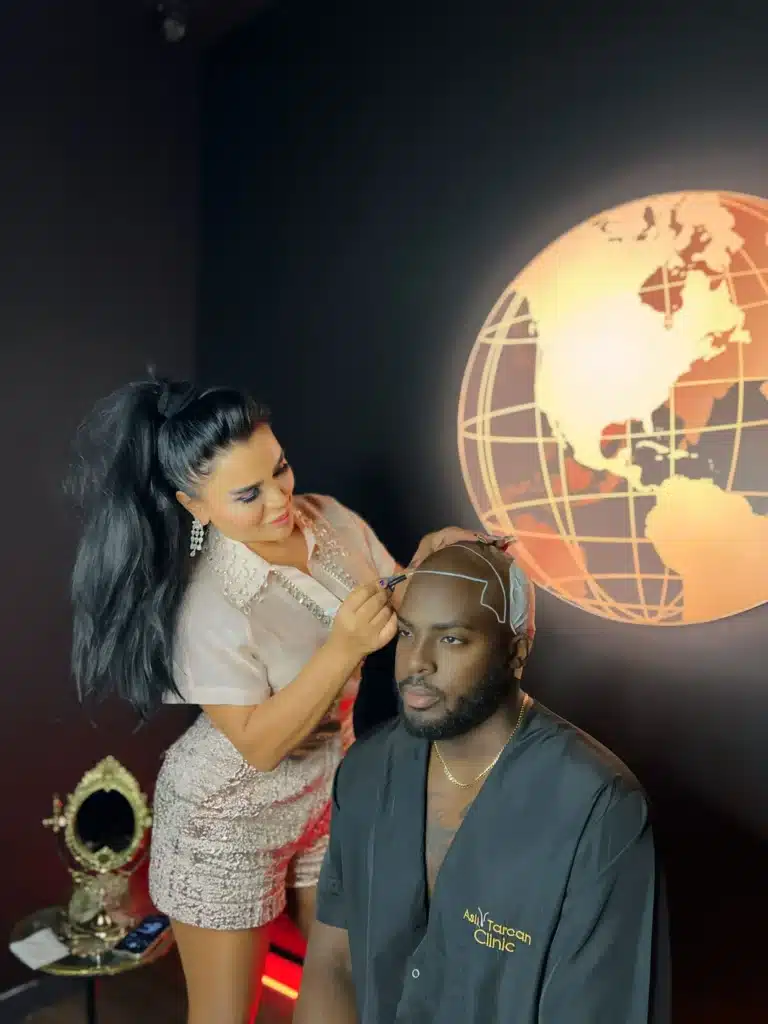
Specialized hair transplant surgeons will create the recipients sites in balding areas with the help of micro-needles. They will gently handle the incision to prevent damage to the surrounding area and take extra care with the angle and direction of sites.
Plastic surgeons will carefully place extracted grafts into recipient areas with natural hair growth direction. It ensures hair density improvement and reduces the necessity of hair growth therapy.
Follicular unit transfer produces best results only if performed by our expert hair restoration surgeons.
The team of nursing will apply topical treatments (e.g., antibiotics) and shift you to the caring unit. Surgeons will give you post-operative care instruction and schedule follow-up appointments to track the scalp hair restoration progress.
Adhering to these personalized guidelines ensures optimal healing, minimizes complications, and achieves desired results after a hair replacement surgery.
General trichological hair care instructions includes:
Not all individuals with dreadlocks are suitable candidates for hair transplant surgery. The following are some contraindications and considerations to keep in mind:
By understanding potential complications and taking preventive measures, you can minimize risks and ensure a successful hair transplant with dreadlocks.
Our qualified hair restoration specialists will give you personalized guidance on possible complications.

Price of dreadlock hair restoration varies across different hair transplantation techniques (e.g., strip harvesting, FUE). However, Turkey has hair loss treatment centers like Aslı Tarcan, where you can enjoy the best treatment at highly affordable costs.
The following cost comparison table will make your decision easy:
|
Country |
Hair Transplant With Dreadlocks Cost |
| Turkey | $3,000 – $7,000 |
| UK | $5,000 – $8,000 |
| USA | $5,000 – $10,000 |
| France | $5,000 – $10,000 |
| Germany | $5,000 – $12,000 |
Yes! You can use hair growth medications (e.g., Minoxidil, Finasteride) with dreadlocks.
Dreadlocks can suit fine or thinning hair, but the twisting and weight can strain hair follicles, potentially leading to hair loss and traction alopecia.
Yes, dreads can damage your hairline through a condition called traction alopecia.
Number of things such as traction alopecia, color treatments, medications, genetics or an unbalanced diet can damage dreadlocks.
Yes, dreadlocks are a permanent hairstyle that requires cutting or chemical processing to remove.
A few ways to fix bald spots are dreadlocks including hair extensions, braid or style, hot or beanie, transplant and medical treatments.
Caring for your dreadlocks ensures their health.
"*" indicates required fields