

Rhinoplasty is a popular cosmetic procedure worldwide, but its application varies significantly across ethnic groups. Asian rhinoplasty, in particular, requires a deep understanding of the unique characteristics of Asian facial features.
The goal of Asian rhinoplasty is not only to enhance the nose’s aesthetic appeal but also to preserve cultural identity and harmony with other facial features.
At Asli Tarcan, you can get expert Asian Rhinoplasty, as we bring the latest technology, surgical techniques and required expertise to handle this sophisticated procedure.
In this expert guide, we explore the intricacies of nose surgery tailored to Asian faces, discussing techniques, benefits, risks, and recovery.
Discover how to preserve cultural identity while achieving harmonious facial balance.
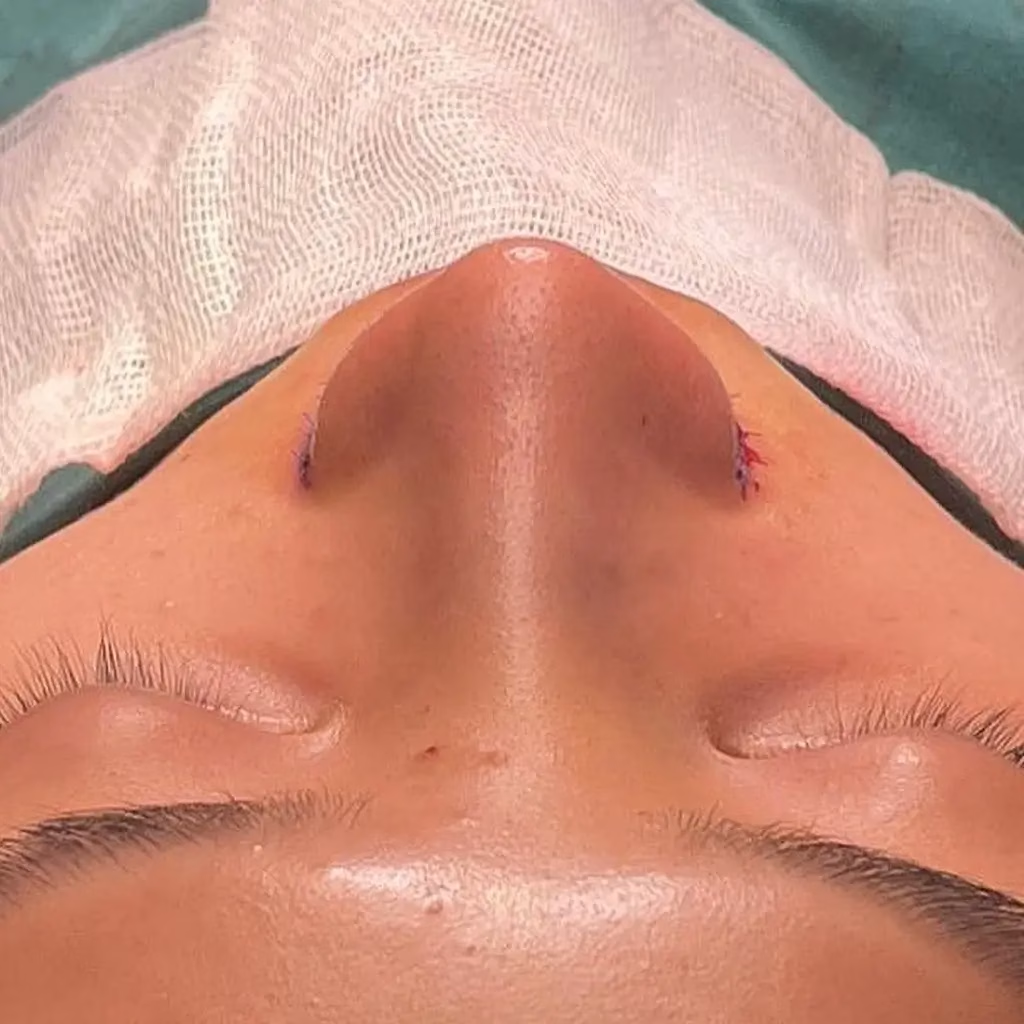
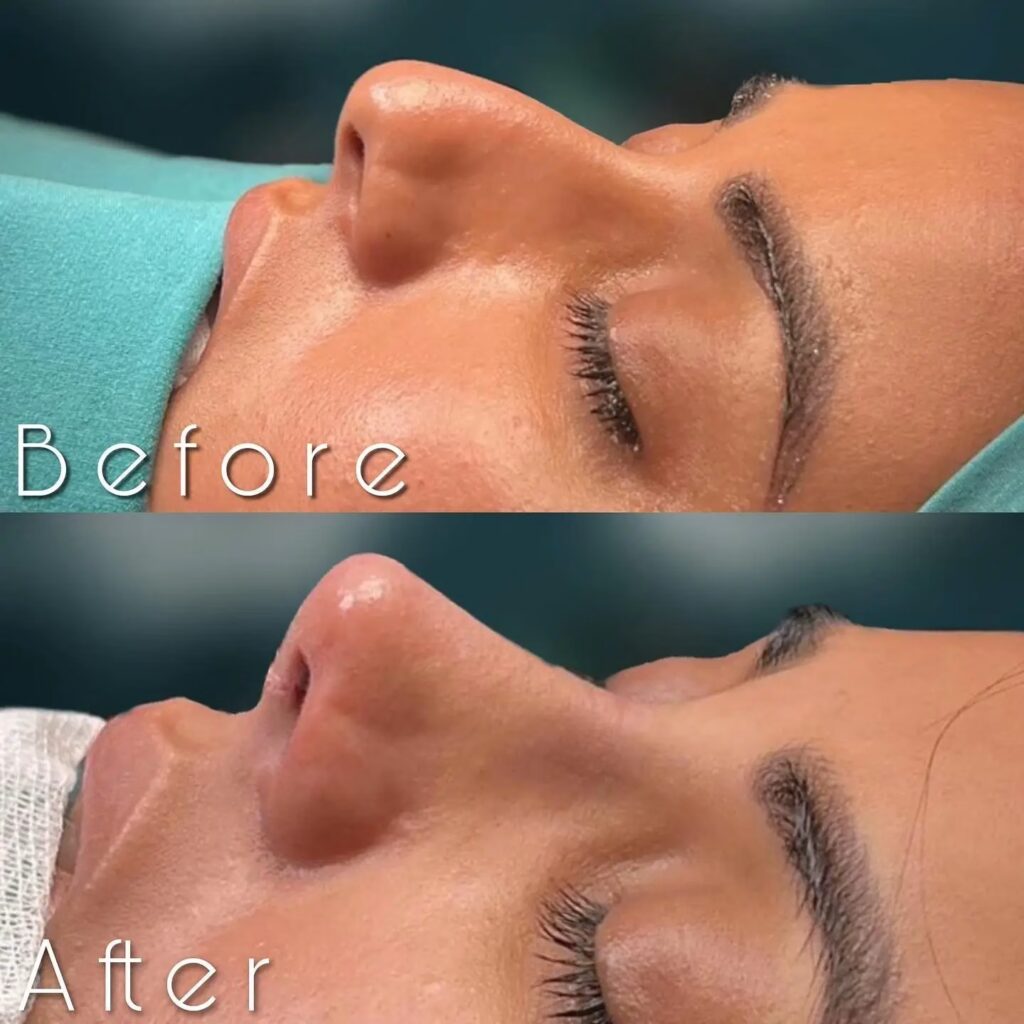
Asian rhinoplasty, also known as Asian nose surgery is a subset of ethnic rhinoplasty, which focuses on the unique anatomy and concerns of Asian individuals.
It is a specialized cosmetic procedure designed to enhance the shape and size of the nose in individuals of Asian descent.
Since, beauty ideals are similar across all cultures, thus patients generally express the same goals for their rhinoplasty procedure. However, due to anatomical differences between Asian and Caucasians, the approach to achieve desired results change significantly.
Generally, Caucasian rhinoplasty is a reductive procedure, where the objective is achieving a reduced or smaller nasal anatomy. Contrarily, Asian rhinoplasty is an augmentative procedure that aims to make the features larger.
The above is a generalization; however, our experts are fully equipped with a deep understanding of the ethnic anatomical differences. Hence, they achieve the most natural-looking results.
Here are key points of differences between an Asian and a Caucasian rhinoplasty.
| Action | Asian Rhinoplasty | Caucasian Rhinoplasty |
|---|---|---|
| Bridge | Augmentation | Reduction |
| Tip Projection | Augmentation | Reduction |
| Nasal Length | Lengthening | Shortening |
| Nasal Tip | Width reduction & refinement | Width reduction & refinement |
| Alar Base | Narrowing and reduction of flaring | Variable need |
| Nostril Rim | Trimming excess tissues | Not usually required |
| Nasal bone fracture/repositioning | Not usually required | Always |
Numerous Asian nose jobs techniques are currently available, as you can select the one that suits your preferences. However, consulting our specialists is vital to check your skin type before opting a particular technique.
Broadly speaking, we can divide Asian rhinoplasty into two major categories – liquid and surgical rhinoplasty.
Let us have a closer look at both of these techniques.
It is also known as non surgical Asian rhinoplasty. It is a popular option for individuals seeking non-invasive cosmetic procedure. However, it is a temporary solution for a bulbous nose tip.
Therefore, individuals looking to resolve a medical problem like improving breathing generally accept it. Therefore, a liquid rhinoplasty will not alter the nose shape; rather it will only create a nose that will accentuate the features of the face.
Moreover, the results of liquid rhinoplasty last between six to twelve months. Since the fillers eventually dissipate over time and leave the nose reverting to its original shape.
It is the most popular form of Asian rhinoplasty as it offers permanent results. Moreover, it has the capability to cater any type of nose and transform them into beautiful and perfect shape as per your wishes.
Unlike non-surgical rhinoplasty, this type offers multiple solutions to nasal shapes and features. Here are few techniques that are possible with a surgical rhinoplasty.
Many individuals confuse themselves over whether they should opt for a rhinoplasty or continue with their current nasal appearance. Since nasal structure can have serious implications on your mental health, thus, you should go for the rhinoplasty if you have any of the following concerns.
Asian rhinoplasty can easily resolve the issues below and boost your confidence.
Low Nasal Bridge and Radix
Since majority Asians have a low nasal bridge with deep nose roots, thus making their faces flatter and wider.
Wide Nostrils
Alar flare and wide nostrils is a major concern for Asians, however, rhinoplasty can resolve this problem.
Lack of Projection
Asian nose have low projection or definition; however, our surgeon can enhance the nasal tip and refinement.
Nasal Tip Refinement
Most Asian individuals have a broader tip. However, our experts can help you get a refined nasal tip and help you get a balanced face
Nostril Flaring
Asian rhinoplasty can support you to get an aesthetic triangular appearance for your nostril base.
Nasal Bone Repositioning
Such problems give your face a bulky look. However, by repositioning nasal bones closer together, you can get rid of this problem with the help of a rhinoplasty procedure.
All Asian men and women who intend to alter the appearance of their nose are obvious candidates for Asian non surgical rhinoplasty. However, there are a number of other requirements (medical, anatomical and psychological) that will determine your candidacy.
Our experts have listed the following conditions to determine whether you are an ideal candidate for Asian rhinoplasty or not.
Individuals of Asian descent seeking to enhance nasal aesthetics
Those with nasal breathing difficulties (e.g., nasal obstruction)
Individuals with nasal trauma or congenital deformities
Patients seeking revision rhinoplasty (correcting previous surgery)
No severe medical conditions (e.g., diabetes, hypertension)
No active infections or autoimmune disorders
Non-smokers or willing to quit smoking
No history of bleeding disorders
Low nasal bridge
Wide nasal base
Thick nasal skin
Less defined nasal tip
Once you have established your candidacy with the help of our experts, the next step is to start preparing yourself for the procedure. Therefore, pre-op instructions, as provided by our surgeons should be followed to improve chances of better results.
Further, having the right mindset and body will significantly reduce recovery time and increase chances for a successful facial plastic surgery.
Here are pre-op instructions to follow at least 1 month from the scheduled Asian nose job in Turkey.

Although, Asian rhinoplasty is similar to other rhinoplasty surgical procedure. However, since it requires a high level of expertise of keeping the descent intact while performing the procedure. Thus, making it difficult and challenging.
This is where our experts come in handy as they bring experience to deliver desired results without compromising your ethnicity.
Here are common surgical steps involved in a rhinoplasty.
Consultation with our surgeons for Asian nose jobs will help you clear all doubts. This will help you stay positive about the outcomes and committed to the goal.
However, it is recommended that you clear all queries at least two weeks before the scheduled rhinoplasty. So, reach well in time on the day of the procedure to complete pre-op requirements like Asian rhinoplasty before and after pictures.
Further, consultation will also allow our experts to check your past medical history and plan a customized treatment plan. It will also support them in deciding surgical techniques such as closed rhinoplasty or open rhinoplasty.
Ask as many questions as you like, it is always to start with a clear path ahead
You will get a local anesthesia to minimize the discomfort of the procedure. Further, based on the pre-decided method, our surgeons will make an incision inside the nostrils (closed rhinoplasty) or along the columella (open rhinoplasty).
Continuing with dissection, the surgeon will gently lift to separate nasal tissues. It exposes nasal bones and cartilages from the nasal framework. Thus supporting surgeons to make necessary adjustments.
Since Asian individuals lack sufficient septum and conchae cartilage, thus rib cartilage is the most used as the donor site. Usually, a specialized technique known as diced cartilage is used to gather septum and conchae cartilage.
Moreover, alloplastic implants made from synthetic materials (e.g. silicon) are also popular for augmentation.
It is the most important step of the procedure, as our surgeon will perform desired refinement, which may include tip refinement, alar reduction or columellar strut.
Considering the sensitivity of outcome, extra care is taken to ensure tip plasty is successful.
Once satisfied with the refine step, our specialists will close incisions with the help of sutures or staples. Further, to complete the process they will apply a nasal splint to support the new Asian nose job shape.
Our team will wait until your anesthesia has completely worn-off before providing post-op instructions. We suggest having a friend or family member with you to help you better understand the guidelines.
Asian rhinoplasty in Turkey will only produce the desired results if you follow our doctor’s post-op care instructions. Since, the better you take care of yourself after the procedure, the greater the chances of getting desired nasal shape.
Moreover, these guidelines will also help you get back to normalcy without much fuss. Here are instructions to follow, after an Asian rhinoplasty.
Once you reach home after surgery, observe the following guidelines that will make you feel better and keep you in better shape.
You should start feeling better by this period, however, keep following the below instructions to ensure speedy recovery.
Start getting into your routine, as you will feel light and better. Therefore, you can follow the below instructions.
Diet plays a major role in helping you reduce downtime and optimizing the surgery results. Generally, Asian rhinoplasty needs the following dietary requirements.
Yes! Asian rhinoplasty is a safe procedure that is non-invasive and has mild side effects. Thus, it has minimal downtime, making it one of the best procedures for individuals wanting excellent results without hampering their daily routine.
Asian rhinoplasty produces permanent results if it is performed with tissue from your own body, this is known as autologous grafting.
Generally, you can start wearing glasses about 4-6 weeks after Asian rhinoplasty. However, you should consult before you start wearing glasses.
Asian rhinoplasty starts showing its results during the second and third month of the surgery. However, since the tip of the nose is sensitive, it may take a year settling down into its new shape.
Asian rhinoplasty has a high success rate reaching around 90%. However, these results depend on numerous factors like surgeon, clinic and method.
"*" indicates required fields