




Breast augmentation with fat transfer (also known as autologous fat grafting) is a procedure that uses the patient’s own body fat to get a modest increase in breast size and improve the shape. It is a very popular alternative for those who want a more natural feel without using silicone or saline implants.
It has become increasingly popular because it offers a “two-in-one” solution (liposuction to remove fat from areas like the abdomen or thighs and repurposing it to subtly enhance the breasts). It is the perfect choice for anyone who wants a softer, more realistic look and feel without having to use synthetic breast implants.
If you think about it, there are three main benefits:
- A natural look and feel
- Dual benefit
- Minimal scarring
And now, with the general introduction out of the way, let’s jump into the definition.
Clinical research supports the effectiveness of breast augmentation with autologous fat grafting for achieving natural-looking results. In a systematic review of 35 studies including 3,757 women, the average fat graft retention rate was about 58%, with most patients reporting high satisfaction despite some fat resorption over time. The study also noted that complications such as fat necrosis can occur but are generally manageable when the procedure is performed properly
What Is Fat Transfer Breast Augmentation?
This procedure has a clear definition. This is a type of plastic surgery where the surgeon strategically relocates fat cells to improve the size and shape of the breasts. Experts use fat harvesting to transfer fat from one area of the body (typically the abdomen, thighs, or flanks) to the breast tissue.
This process combines body contouring with breast enhancement pretty effectively, allowing patients to slim specific areas of their body down while adding volume where it is most needed, and the best part: it’s all done without any foreign implants.
Fat Transfer vs. Breast Implants: Quick Comparison
Here’s a quick comparison chart that compares this alternative to implants with standard breast implants. Choosing between fat transfer to the breasts and traditional breast augmentation, of course, depends on your aesthetic goals and budget.
Feature | Fat Transfer | Breast Implants |
Size Increase | Modest (usually 0.5 to 1 cup) | Significant (multiple cup sizes) |
Feel | Completely natural | May feel firmer or synthetic |
Longevity | Permanent once stabilized | Often require replacement (10-15 years) |
Risks | Fat necrosis, oil cysts | Rupture, capsular contracture |
Maintenance | Minimal; affected by weight fluctuations | Regular imaging and monitoring |
Cost | Often higher due to liposuction and processing | Generally lower for the initial surgery |
Ideal Candidate | Anyone who needs subtle, natural changes | Anyone who wants a dramatic volume increase |
How the Procedure Works (Step-by-Step)
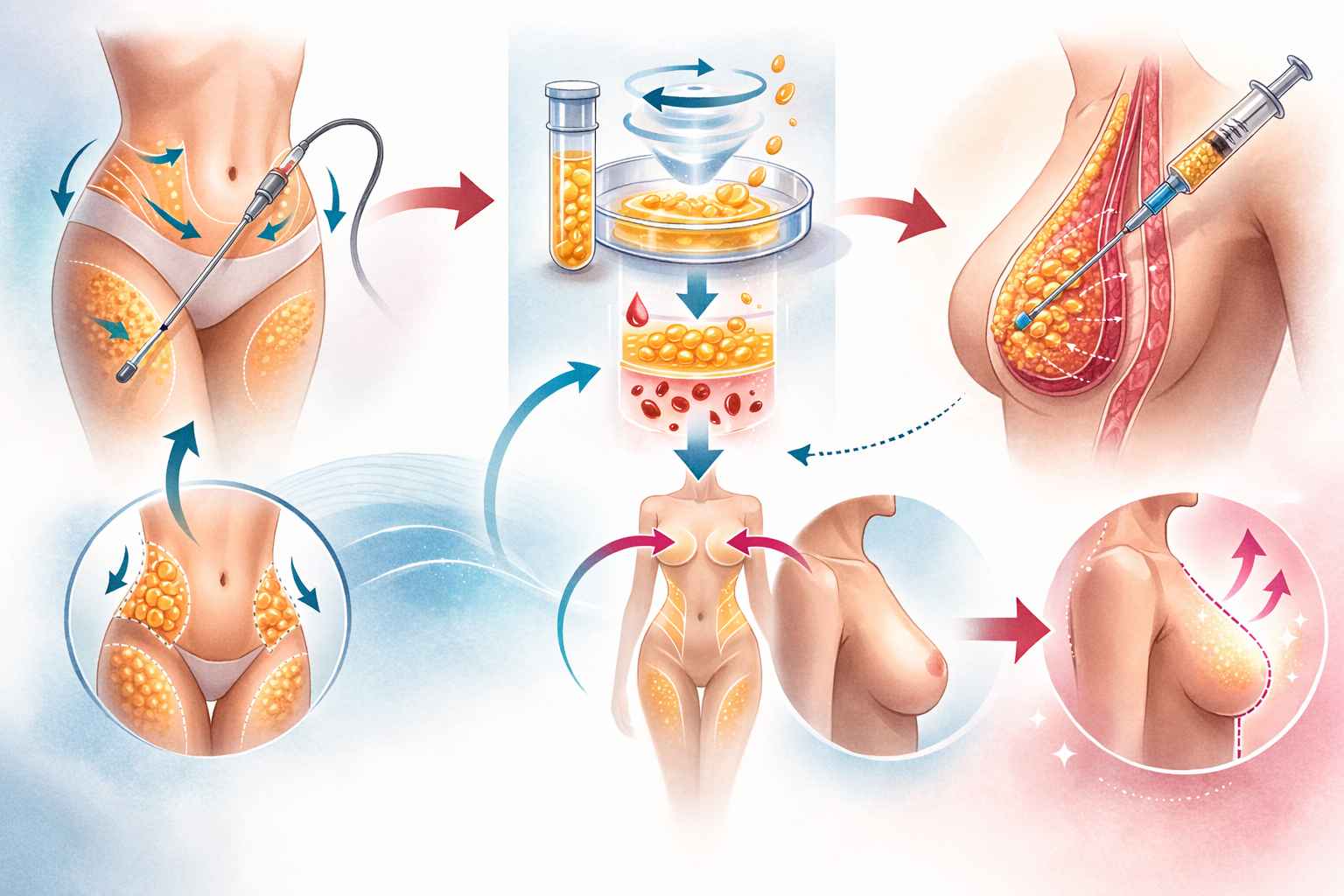
If you are leaning toward getting breast augmentation treatment with fat, you should know that it involves a precise three-step process.
Step 1: Fat Harvesting (Liposuction)
Step 2: Fat Processing and Purification
Step 3: Fat Injection into the Breasts
Step 1: Fat Harvesting (Liposuction)
The first stage involves fat harvesting. The surgeon uses specialized liposuction methods to remove fat from the donor areas (usually the abdomen, flanks, or “love handles,” thighs, and buttocks), and the patient is generally put under general anesthesia. Your plastic surgeon will then use a special tool called a cannula to carefully remove fat.
Step 2: Fat Processing and Purification
The medical team will then clean and prepare the fat they removed for the following step. They will break healthy fat cells apart from blood and other fluids, and this is the purification process. It is very important to get a high survival rate of the transplanted cells.
Step 3: Fat Injection into the Breasts
The purified fat is strategically layered into the breasts. An even distribution is critical here to ensure that the cells thrive. The duration of the plastic surgery session varies by patient, but it usually takes between 2 and 4 hours.
Benefits of Breast Augmentation With Fat Transfer
Natural look and feel
This is by far the most important benefit. The patient’s breasts get enhanced using their own fat tissue. The result tends to be way softer and more natural than standard, synthetic alternatives.
No implants or foreign materials
One more major benefit is that the procedure avoids the need for implants. Many people view this as a safer and more natural option.
Body contouring from liposuction areas
The treatment also offers additional aesthetic benefits. Smaller incisions and minimal scarring Lower risk of implant-related complications Less maintenance compared to standard implants
Limitations of Fat Transfer Breast Augmentation
Of course, just like any procedure, this one also has limitations that patients should understand before they commit.
Volume Limitations
Most patients will get only a modest increase in breast size during a single procedure. Those seeking dramatic enlargement may still require breast implants.
Fat Survival Limitations
Not all transferred fat cells will survive the procedure. In many cases, approximately 30% to 50% of the injected fat is reabsorbed by the body over time. Some patients will probably need additional sessions to get the right shape and size.
Limitations Based on the Patient’s Biology
There are also factors such as weight fluctuations, lifestyle, and metabolism that can influence the final results.
Additional Limitations
The procedure cannot significantly correct issues like sagging breasts. In these types of cases, you should probably consider combining fat grafting with a breast lift.
Risks and Potential Complications
Fat transfer breast augmentation, of course, carries potential risks, just like any procedure.
One of the most common complications is fat necrosis. This happens when some transferred fat cells don’t survive and end up forming firm lumps. And, while these lumps are usually harmless, make sure to get an evaluation by a certified physician.
Other possible complications include oil cysts, infection, asymmetry, etc. Another issue is the formation of calcifications that can appear on mammograms, and finally, there are rare complications related to anesthesia.
But if you go with board certified plastic surgeons, this reduces the risks significantly.
Recovery and Aftercare
Recovery typically involves mild swelling and bruising in both the breasts and the donor areas.
But in any case, most patients will return to light activities within several days, although they should avoid strenuous exercise for several weeks. Surgeons can recommend wearing compression garments on liposuction areas to support healing and reduce swelling.
The breasts will appear slightly larger right after surgery, but some of the transferred fat will naturally be absorbed during the healing process.
The final results are usually visible after several months, once the swelling subsides and the remaining fat stabilizes.
Regular follow-up appointments are great because they allow experts to monitor the healing and ensure that the transferred fat is integrating properly. Patients should also maintain a stable body weight. Significant weight fluctuations can affect long term results.
FAQs
Is breast augmentation with fat transfer worth it?
Breast augmentation with fat transfer can be worth it for people who want a modest size increase and a very natural look and feel. It also has the added benefit of body contouring since fat is taken from areas like the abdomen or thighs. However, it typically increases breast size by only about one cup and may require multiple sessions to achieve the desired result.
Does fat transfer to breasts last forever?
Not all transferred fat survives, but the fat that successfully integrates with the breast tissue can last for many years. Typically, about 50–70% of the transferred fat remains long-term. Once stabilized after a few months, the surviving fat behaves like normal body fat and can change with weight fluctuations.
What are the downsides of fat transfer?
One downside is that some of the transferred fat is naturally reabsorbed by the body, which can reduce the final volume. Results can be less predictable compared to implants, and multiple procedures may be needed. There is also a limited increase in size compared with traditional breast implants.
Can you add fat transfer to breast implants?
Yes, fat transfer is often combined with breast implants in a procedure sometimes called hybrid breast augmentation. The implants provide most of the volume, while fat is used to smooth edges and create a more natural contour. This approach can improve the overall aesthetic result.
What is the best age for fat transfer?
There isn’t a single “best” age; the key requirement is that the breasts are fully developed and the patient is in good health. Many candidates are in their 20s to 40s, but older patients can also qualify if they have sufficient donor fat and healthy tissue. A consultation with a surgeon determines individual suitability.
How painful is breast fat transfer?
Most patients report mild to moderate discomfort rather than severe pain. The soreness usually comes more from the liposuction donor areas than the breasts themselves. Pain and swelling typically improve within a week or two.
Why is breast fat transfer not popular?
It is less popular mainly because it provides only a modest increase in breast size compared with implants. The results can also vary since some fat is absorbed by the body. Additionally, not everyone has enough donor fat to make the procedure worthwhile.
Can I go up 2 cup sizes with fat transfer?
In most cases, fat transfer increases breast size by about half to one cup size per session. Achieving a two-cup increase usually requires multiple procedures. Some patients may not reach that size solely with fat transfer depending on available donor fat.
How long after fat transfer can I wear a bra?
Many surgeons recommend wearing a supportive but non-compressive bra within a few days after surgery. However, tight or underwire bras are usually avoided for several weeks to avoid pressure on the transferred fat. Exact timing varies based on the surgeon’s post-operative instructions.
Which is safer, implants or fat transfer?
Both procedures are generally considered safe when performed by a qualified plastic surgeon. Fat transfer avoids placing a foreign object in the body, but it involves liposuction and has variable results. Implants have a long track record but may require replacement or maintenance over time.
Does fat transfer look natural?
Yes, fat transfer tends to look and feel very natural because it uses your own body fat rather than an implant. The breasts usually have a softer contour and more subtle enhancement. This makes it a popular option for patients seeking a natural-appearing result rather than a dramatic size increase.