




Stress affects the body in so many ways. One of those changes is closely connected to hair health, and it is one of the most visible signs that stress is taking its toll. Many patients from around the world notice increased shedding and thinning during or after stressful periods, which naturally raises concern.
But fear not. We’re here to help you understand the relationship between stress and hair loss and teach you how to separate temporary reactions from long-term conditions. This will clarify if you need to take action.
A recent review in the Journal of the American Academy of Dermatology highlights that psychological stress is significantly associated with various hair loss disorders, including telogen effluvium and alopecia areata, indicating that stress can trigger or exacerbate hair shedding by disrupting the normal hair growth cycle.
The Connection Between Stress and Hair Loss
Normal hair growth is directly connected to a stable internal balance. When the body is under prolonged stress, it simply needs to redirect energy toward vital systems, often at the expense of non-essential functions (such as hair production). This shift can interfere with the activity of hair follicles, causing more hairs than usual to stop growing and start shedding.
Stress-related hair loss usually appears weeks or months after the triggering event, which can make the connection difficult to recognize. However, once the stress response settles, things usually go back to normal.
Can Stress Really Cause Hair Loss?
Yes, but it’s tricky. Stress can cause hair loss, but it does so indirectly. Stress does not damage hair permanently on its own. Instead, it disrupts the hair cycle, pushing follicles into a resting phase earlier than expected. As a result, you will notice excess shedding.
This type of hair loss is typically referred to as “diffuse,” meaning it affects the entire scalp rather than specific areas. While it is alarming, it is often temporary, but regardless, if you notice something like that, you should consult a specialist.
How Hair Growth Works: Understanding the Hair Cycle
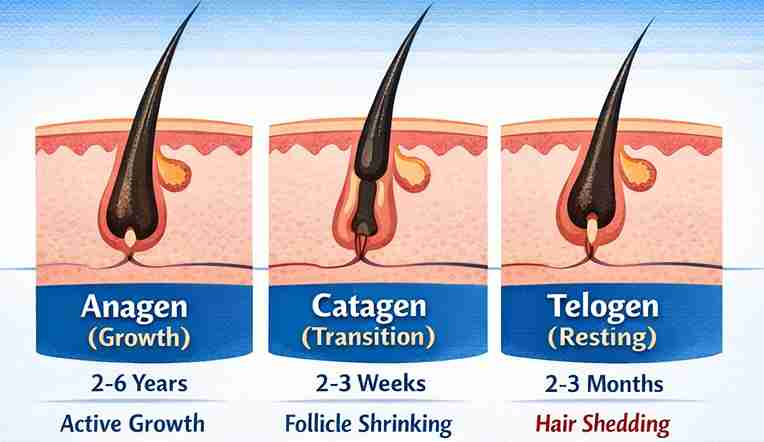
Normal hair growth follows a repeating cycle with three stages.
- Anagen (Growth)
- Catagen (Transition)
- Telogen (Resting/Shedding)
Most hairs are actively growing at any given time, but there is a smaller percentage of them that are in the resting phase.
Now, when stress interferes with this cycle, a larger number of hairs enter the resting phase all at once. This condition is known as Telogen Effluvium, and it is the most common form of stress-related hair loss. Shedding usually occurs several weeks after the initial stressful situation, and not immediately.
Types of Hair Loss Linked to Stress
Stress can actually contribute to several forms of hair loss, but it all depends on the case. Each individual has issues caused by different factors, and this can cause reactions that differ in terms of severity.
The most common by far is Telogen Effluvium, but there are other forms like Alopecia Areata, an autoimmune condition where the body’s immune system attacks hair follicles, and Trichotillomania, a psychological urge to pull out hair during stressful moments.
In other cases, however, stress can worsen existing hair conditions or trigger inflammatory responses that can have a negative effect on the scalp.
The silver lining is that stress-related hair loss rarely causes complete bald patches or permanent follicle loss on its own.
Common Causes of Stress-Induced Hair Loss
Significant physical or emotional shock is something that often triggers hair loss. Also, major illnesses, surgery, or big life changes; these can be the cause as well. Constant anxiety or quick weight loss can be common factors as well.
Chronic stress can be just as impactful as major life events. Over time, some form of ongoing tension can keep the body in a heightened state, which can then prolong shedding and delay recovery.
How Long Does Stress-Related Hair Loss Last?
Losing hair due to stress generally follows a set timeline. Thinning typically starts two or three months after a difficult period, and it can persist for a while. Once your life settles down, your hair follicles will slowly shift back into their regular growing routine.
Most individuals notice a clear difference within six to nine months. Regaining your original thickness may take more time, based on your physical wellness and how effectively you handle daily pressure.
Below is a brief chart outlining the stages and what to expect during each one.
Phase | What Happens | What You May Notice |
Stress event | The body shifts energy toward essential functions | No immediate hair changes |
2–3 months later | More hair follicles enter the resting phase | Increased shedding during washing or brushing |
3–6 months | Shedding reaches its peak and then stabilizes | Noticeable thinning but no bald patches |
6–12 months | Hair growth gradually resumes | New regrowth and improved hair density |
How to Stop and Reverse Hair Loss Caused by Stress
Managing stress is one of the most important steps in reversing stress-related hair loss. We are talking about healthy sleep patterns, addressing your anxiety, maintaining a balanced diet, and going to regular check-ups. This all supports hair recovery.
Also, gentle hair care is an important part of managing the shedding phase. Avoiding excessive tension, harsh treatments, or aggressive hairstyles helps a lot.
If you are someone who has underlying genetic hair loss, stress can cause excessive thinning and speed up a process that was already developing. If you are on a budget, you should look into getting a hair transplant in Turkey. You get access to the same type of care, the prices are a lot lower, and you get to have a short vacation in a wonderful country.
FAQs
Can hair grow back after stress-related hair loss?
Yes. In most cases, hair grows back once stress levels normalize and the hair cycle goes back to normal.
How long does it take for hair to regrow after stress?
Visible regrowth often begins within three to six months, with continued improvement over the following months.
How can I tell if my hair loss is from stress or genetics?
Stress-related hair loss usually causes diffuse shedding, while genetic hair loss follows predictable patterns. A professional evaluation will help you distinguish between the two.
What vitamins help with stress-related hair loss?
Nutrients such as iron, vitamin D, and B-complex vitamins support hair health, but supplementation should be based on medical guidance.
Is stress hair loss permanent?
No. Stress-related hair loss is usually temporary and reversible once the underlying stress is addressed.