




Hair loss in women is more common than you might realize. While it is often discussed quietly, it affects women and men of all ages and backgrounds. Hair loss may appear gradually or suddenly.
There are many causes for this condition. They can range from genetics and hormones to medical conditions and lifestyle factors. If you want to battle this, you need to understand what triggers hair loss including the best ways to fight it. This is the first step toward managing it effectively and knowing when to seek professional guidance.
Research shows that telogen effluvium is the most common clinical pattern of hair loss in women, particularly affecting those aged 20–40 years and often occurring without an associated illness, highlighting how common diffuse shedding can be following a trigger such as stress or hormonal change.
What Is Hair Loss in Women?
Hair loss in women refers to excessive shedding or visible thinning. Women shed a little hair every day, and that’s normal, but if it goes beyond these normal metrics, it can be an early sign.
In other words, women shed hair naturally as part of the natural growth cycle, but when hair falls faster than it can be replaced, patients can notice visible thinning areas. Some women notice hair loss along the part line or around the temples. In any case, they will see reduced hair volume over time.
Hair loss in women can be temporary, but it can also be long-lasting. It all depends on the underlying cause and how early you found out about it and started your treatment.
Understanding the Hair Growth Cycle
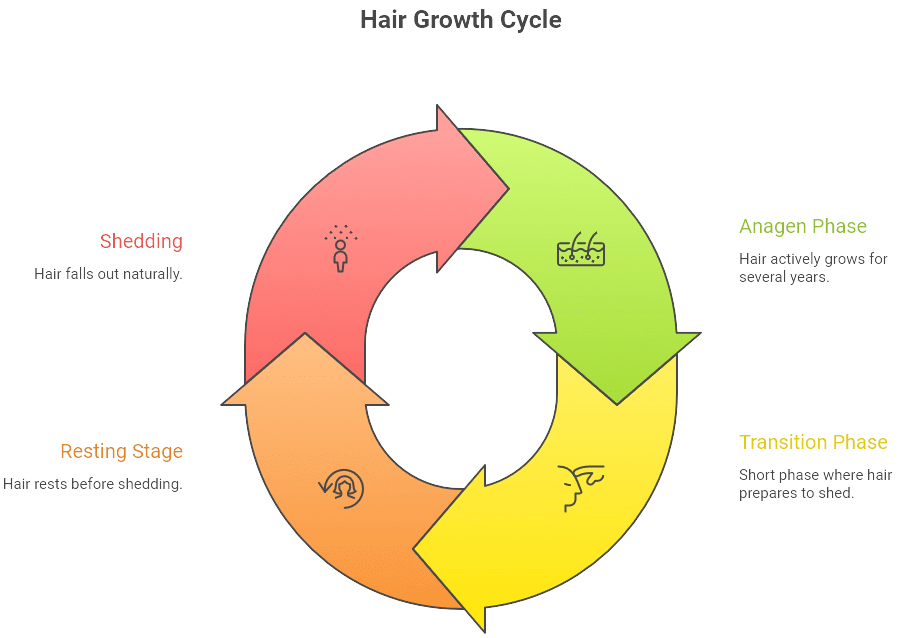
Healthy hair growth follows a very predictable cycle. It’s well-defined and made up of three phases.
- During the anagen phase, hair actively grows for several years.
- This is followed by a short transition phase.
- After that, the hair enters the resting stage and eventually sheds.
When a more-than-normal number of hairs enter the resting phase at once, patients will most likely notice excessive shedding. Conditions such as telogen effluvium disrupt this cycle, often leading to noticeable thinning several months after a triggering event (such as illness or stress).
The Common Types of Hair Loss in Women
There are several types of hair loss that commonly affect women. Each of them has distinct patterns and causes.
Female pattern hair loss, sometimes referred to as female pattern baldness, is the most common form. Patients will notice gradual thinning at the top of the scalp while the frontal hairline remains intact.
Another form is alopecia areata. This is an autoimmune condition where the immune system attacks hair follicles by mistake. This condition can result in sudden, patchy hair loss on the scalp or other parts of the body.
Temporary shedding that was caused by telogen effluvium is also common and often reversible once the trigger is resolved or removed.
The following table will give you better insights into the causes, typical patterns, and you can see if the condition is reversible or not.
Cause | Typical Pattern | Reversibility |
Androgenetic alopecia | Gradual thinning at the crown | Often long-term |
Telogen effluvium | Diffuse shedding | Usually reversible |
Alopecia areata | Patchy hair loss | Sometimes reversible |
Hormonal changes | Overall thinning | Often reversible |
Medical conditions | Variable patterns | Depends on the cause |
The Main Causes of Hair Loss in Women
Generally speaking, there are four main causes.
- Genetics and Hormones – A family history of thinning hair significantly increases the likelihood of developing androgenetic alopecia. Hormonal changes related to pregnancy and menopause can also trigger hair thinning or shedding. Also, if you are using hormonal medications, this can also be the underlying factor.
- Medical Conditions and Medications – Certain medical conditions, including thyroid disorders, anemia, and autoimmune diseases, are common causes of hair loss in women. Some medications can also contribute, with hair loss appearing as a side effect of treatment rather than a primary condition.
- Stress and Physical Triggers – Physical or emotional stress can cause hair to prematurely shift into the resting phase. This type of hair loss often becomes noticeable months after the triggering event and may involve diffuse shedding rather than bald patches.
- Styling and Hair Care Practices – Excessive tension from tight hairstyles may contribute to thinning around the hairline. In some cases, women may notice changes near the temples or a subtle receding hairline that happens as a result of repeated traction over time.
Treatment Options for Hair Loss in Women
Available treatment options will depend on the cause and severity of your specific hair loss issue. In many cases, addressing the underlying triggers will lead to gradual hair regrowth.
Topical therapies, oral medications, and nutritional support are also valid ways to battle this condition. For autoimmune or hormone-related illnesses, targeted medical care is often required. Your doctor may also suggest lifestyle changes or further testing if hair loss is linked to an internal health issue.
Another option to consider is a hair transplant in Istanbul, which is well known for this procedure. It is also possible to undergo a hair transplant without shaving the existing hair, allowing for a more discreet recovery.
Can Hair Loss in Women Be Prevented?
Unfortunately, not all hair loss can be prevented, and this is especially true for those genetic forms. However, early intervention can slow the progression of the illness and improve the outcome. Maintaining a balanced diet, managing stress, and avoiding harsh hairstyles will most probably reduce the risks.
If your hair loss persists or worsens over time, it is important to talk to your doctor and get a proper evaluation. Early diagnosis is vital, and it will open doors to many treatment options. All this improves the likelihood of successfully managing and beating the disorder.
FAQs
What is the most common cause of hair loss in women?
The most common cause of hair loss in women by far is female pattern hair loss. This condition is strongly influenced by genetics and a general sensitivity to hormone changes.
How much hair loss is normal for women per day?
Shedding up to 100 hairs per day is generally considered normal. It happens to every woman. But consistent shedding beyond this will more likely than not require an evaluation.
Does menopause cause hair loss in women?
Yes, in some cases. The fact is that hormonal shifts during menopause can contribute to thinning and changes in hair density.
Is female hair loss permanent?
Some forms are temporary, but there are instances where the condition is long-term. The final outcome depends on the underlying cause and whether you started your treatment on time.
What vitamin deficiency causes hair loss in women?
Low levels of iron, vitamin D, or certain forms of vitamin B can contribute to hair loss. Testing helps determine whether you need supplements.