




A successful hair transplant can regain your confidence but it also involves a healing process that requires both care and time. Most patients inquire about when they can return to normal activities, and particularly when they can resume intimacy. This question matters because the scalp has healing grafts that need protection.
Sex after hair transplant is often a topic that patients feel shy about, but it matters for success and healing. The grafts remain delicate in the early days and physical exertion like sex can slow healing or affect results.
This guide will cover when you can have sex after hair transplant and discuss masturbation after the procedure. It will also explain why no sex after hair transplant is advised.
If you have already had sex after hair transplant, this article will help you protect your outcome and continue healing the right way.
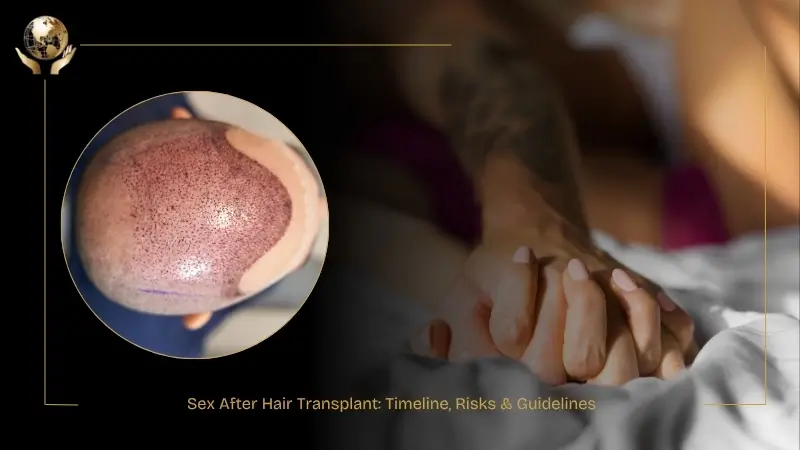
Why No Sex After Hair Transplant?
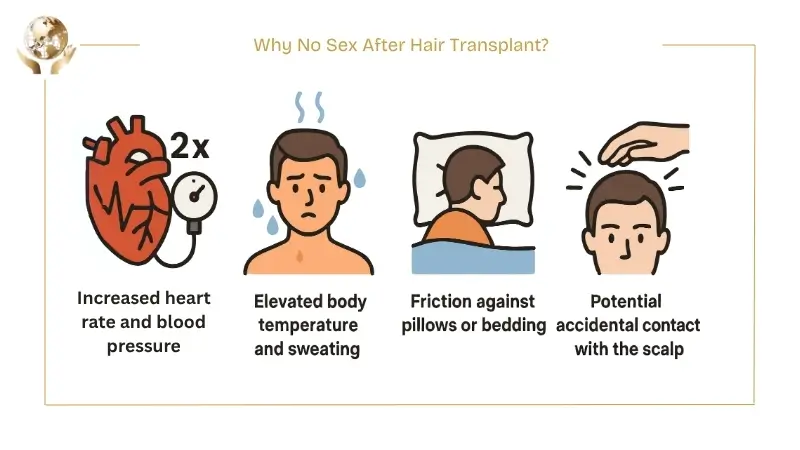
Sexual activity causes several physiological responses that can interfere with graft healing. These include:
- Increased heart rate and blood pressure
- Elevated body temperature and sweating
- Friction against pillows or bedding
- Potential accidental contact with the scalp
In the first 7–10 days, grafts are at their most sensitive state. Moreover, engaging in sexual activity the day after a hair transplant may increase inflammation and prolong redness and crusting. The scalp needs a clean, calm environment to regenerate.
Surgeons recommend avoidance not just out of caution, but to protect the survival of the follicles and long-term growth.
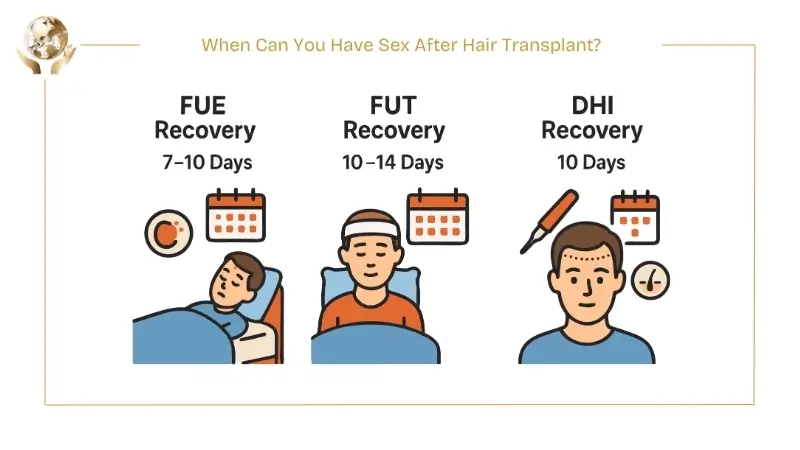
When Can You Have Sex After Hair Transplant?
The majority of physicians advise patients to wait at least 7-10 days before engaging in intimacy following a transplant. The healing is faster in some methods and slower in others.
| Type of Procedure | Wait Time |
|---|---|
| FUE Transplant | 7–10 days |
| FUT Transplant | 10–14 days |
| DHI/Implants | 10 days |
By day 10 the scabs usually begin to fall off on their own and grafts feel more secure. Still heavy sexual activity should wait until the next week even if you feel healed. Light contact might be allowed but only after your doctor checks your scalp.
If you’ve had sex after hair transplant surgery earlier than 7 days, monitor your scalp closely. Report any excessive bleeding or irritation.
Avoid these activities during sex until cleared by your surgeon:
- Pressure on the back of the head
- Excessive sweating
- Hair pulling or touching
- Lying flat for extended time
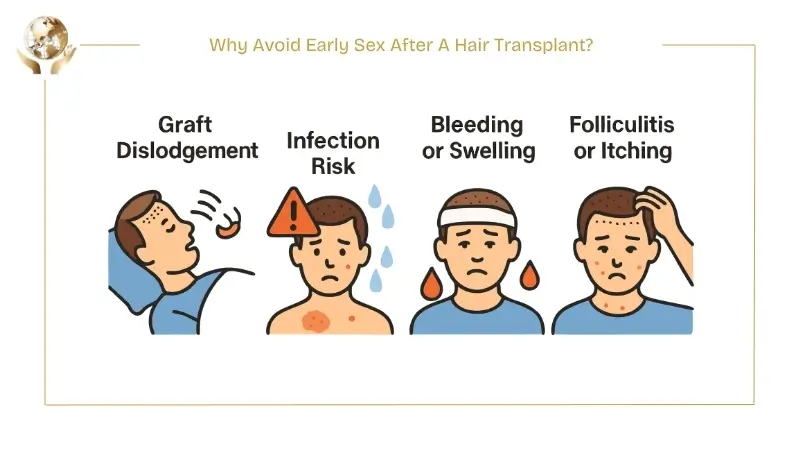
Why Avoid Early Sex After A Hair Transplant?
Having sex too early after FUE hair transplant can result in complications such as:
- Graft Dislodgement: Implanted follicles are fragile. Friction from pillows or head movement can cause grafts to fall out, especially within the first 3–5 days.
- Infection Risk: Sweat and bodily fluids can contaminate the graft area, leading to infection.
- Bleeding or Swelling: Vigorous sex may spike your blood pressure and lead to swelling around the forehead and eyes.
- Folliculitis or Itching: Increased heat and sweat can clog pores or promote bacteria, causing bumps and itchiness.
Here we are going to summarize the risks, their severity, and prevention tips.
| Concern | Risk Level | Precaution |
|---|---|---|
| Graft Loss | High | Delay intimacy |
| Swelling | Moderate | Use head elevation |
| Infection | Low–Moderate | Maintain hygiene |
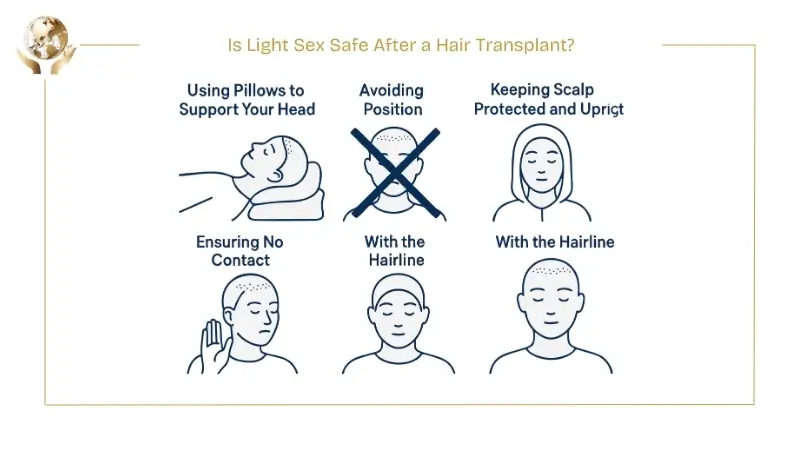
Is Light Sex Safe After a Hair Transplant?
Some ask if light sex after hair transplant, meaning low-movement, non-strenuous activity, is safe earlier. Doctors still urge caution.
Even mild arousal increases scalp vascularity, which can:
- Prolong healing
- Dislodge crusts prematurely
- Cause unintended graft loss from friction
If you must resume earlier than Day 10, consider:
- Using pillows to support your head
- Avoiding the missionary position (which increases head contact)
- Keeping scalp protected and upright
- Ensuring no contact with the hairline
Things to Avoid After Hair Transplant (Including Sex)
The recovery phase goes beyond just intimacy. Here’s a quick list of general restrictions post-op:
Avoid:
- Heavy exercise or gym workouts (first 10 days)
- Swimming (2–4 weeks)
- Helmet or hat use (unless approved)
Sexual activity or masturbation (first 7–10 days)
- Smoking and alcohol (2 weeks)
- Hot showers or steam rooms
Safe Practices:
- Sleep at 45° angle for 5 nights
- Wash scalp gently as instructed
- Avoid direct sunlight
This table shows when you can safely resume specific activities.
| Activity | Safe After |
|---|---|
| Sex | 7–10 days |
| Masturbation | 7 days |
| Gym | 14 days |
| Smoking | 14 days |
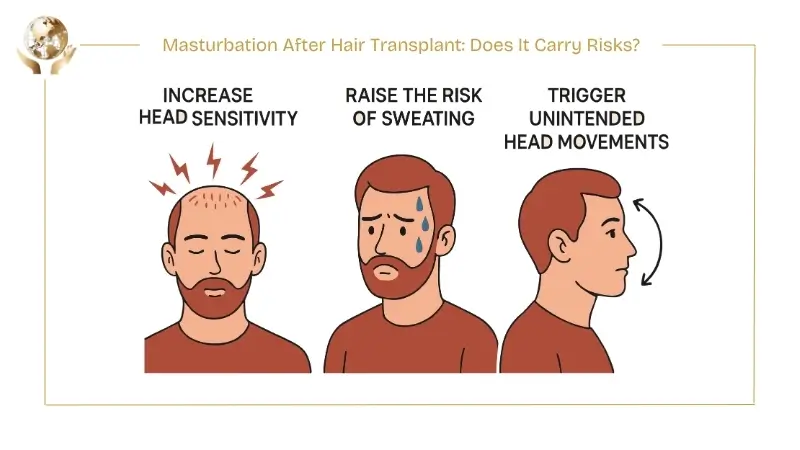
Masturbation After Hair Transplant: Does It Carry Risks?
Patients often ask, “Can we masturbate after a hair transplant?” The answer is—yes, but with caveats.
Contrary to intercourse, masturbation does not have to include partner-induced pressure and friction. However, the physical arousal response, which includes increased blood pressure, heart rate, and vasodilation, still occurs. This may:
- Increase scalp sensitivity
- Raise the risk of sweating
- Trigger unintended head movements
Experts suggest avoiding it for the same 7–10 days as intercourse. While you may feel “safe” doing it alone, your body’s response still mimics exertion.
User experiences like “I had sex after hair transplant” or “Had sex after hair transplant” found on forums like Reddit show mixed outcomes. But no formal studies validate its safety in the early recovery phase.
Viagra After Hair Transplant: A Hidden Risk?
Some patients inquire about Viagra after hair transplant or using other erectile dysfunction medications during recovery.
Viagra (sildenafil) causes vasodilation, which:
- Increases blood flow, including to the scalp
- Could worsen swelling or bruising
- May impact clotting in sensitive areas
Although not directly contraindicated, surgeons suggest avoiding Viagra or similar drugs for at least 5–7 days post-procedure. Use only if your doctor approves it.
Sex Before Hair Transplant: Does It Matter?
While much of the advice focuses on post-op intimacy, many wonder if sex before hair transplant has any effect. In general, there are no medical restrictions on intercourse before surgery. However:
- Avoid alcohol the night before surgery
- Ensure proper hydration
- Do not take erectile medication unless cleared
Sex the night before can:
- Lead to dehydration
- Affect blood pressure
- Delay healing due to fatigue or inflammation